Texas electric bills are on average around $137.26 each month, with a rate of 12.04 cents per kilowatt-hour. Different sections of the bill will provide customers with important information about their energy usage and how to save energy in the future. This article will explain the different sections of a Texas electric bill and the information it includes.
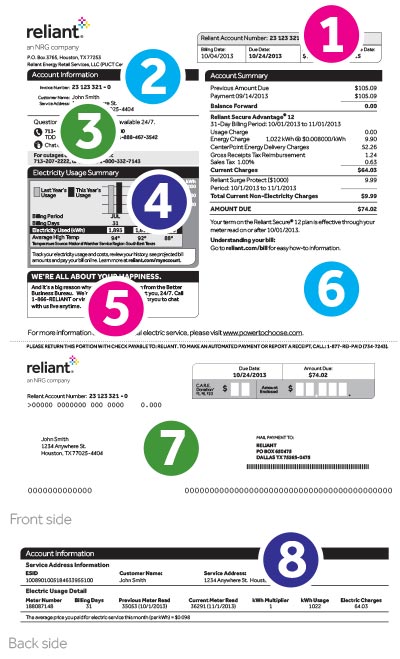
1. Bill Overview
This section is a snapshot of your most important bill information. You'll need your account number if you need to call your provider or when you mail in your check or money order. This section also shows you the date you were billed, the date payment is due and the After Due Date amount you owe if you pay late. If a customer needs to contact their provider's customer care line or sign up for a new plan, they will need to have this information ready.
2. Account Info
The current bill includes your Invoice Number is the unique number assigned to each specific bill.
3. Questions
This section provides contact Information, if you have any questions about your bill or service.
4. Consumption History
The consumption history section provides a view of how your energy usage has changed over a period of time, typically between six months and a year. This can help consumers pinpoint a time when their energy usage is higher and make adjustments to be more energy-efficient.
5. Monthly Usage
This section shows the exact amount of energy consumed for the current month in kilowatt hours (kWh). It may also include information like usage from last month or from the same month last year.
6. Account Summary
Previous Amount Due: the amount due from your previous bill
Payment: the most recent payment we've received
Balance Forward: the difference between the Previous Amount Due and Payment. This balance is due right away (not when your current bill is due). If you paid this amount after the invoice was generated, it will still appear on your invoice.
Billing Period: the dates you were billed for
Usage Charge: monthly account fee, if applicable
Energy Charge: the amount of electricity you used (shown in kWh) times the price you pay per kWh
TDSP Delivery Charges: may include building, maintaining and operating power lines that deliver electricity to your home, reading your meter and ensuring it works properly; these charges are set by the Public Utility Commission of Texas and are charged to every customer, regardless of provider
7. Payment Slip
This is the mail-in portion of your bill if you choose to pay via mail.
8. More Account Information
You can find your ESIID and Account Number on the back of your Bill.
Comparing Electricity Rates
It's important for a customer to compare electricity rates so they can find the one that works best for them. Doing so can help customers save money on their monthly bills. To compare rates, customers can look at the Power to Choose website or call their REP.
Moving to a New Address?
When a customer moves to a new address, they should look for the best rate in that area. Again, they can look at the Power to Choose website or call their REP to find the best rate.
Texas Electricity Bill FAQs
How do I compare electricity plans when the advertised rate doesn't include all fees?
Comparing electricity plans accurately in Texas requires looking beyond the advertised rate. Always review the Electricity Facts Label (EFL) before enrolling in a new plan to ensure you understand the total electricity costs, including all fees and delivery charges. The EFL breaks down pricing by usage tier ??" showing what you'll pay at 500 kWh, 1,000 kWh, and 2,000 kWh per month ??" so you can match the rate to your actual usage. Hidden fees such as monthly base charges, paper billing fees, and minimum usage fees can significantly increase your effective rate. Use our comparison tools on the Electricity Bill Resources page, and browse current rates on our Electricity Rates page.
How do I calculate the true total cost of Texas electricity plans including seasonal changes?
Calculating the true total cost of a Texas electricity plan starts with a simple formula: Total Usage ?- Price per Kilowatt Hour = Total Electric Bill. However, this baseline calculation does not account for delivery charges, monthly fees, or bill credits that may only apply at certain usage levels. In summer months, usage can spike dramatically in Texas, so a plan that looks affordable at 1,000 kWh/month may cost far more when you're using 2,000+ kWh. To account for seasonal fluctuations, use usage-based comparison tools that show your actual cost at multiple usage levels. Learn more on our Electricity Bill page and check rates by city such as Houston or Dallas.
How do I read the terms of service to avoid surprise charges on my Texas electricity bill?
Understanding the Electricity Facts Label (EFL) is one of the best ways to avoid hidden fees and surprise charges on your Texas electricity bill. The EFL is a standardized document required by the Public Utility Commission of Texas that discloses the plan's rate structure, all applicable fees, and usage-based pricing tiers. Look specifically for monthly base charges, minimum usage fees, paper billing charges, and bill credit thresholds that could change your effective rate. Also review the Terms of Service document for information on early termination fees and automatic renewal policies. Visit our Electricity Bill Resources page for guidance, and compare plan details at our Electricity Rates page.
How accurate are electricity rate comparison tools for predicting my actual bill?
Electricity rate comparison tools vary in accuracy. The most reliable tools calculate your projected bill at multiple usage levels so you can see your true monthly cost ??" not just the advertised rate at a single usage tier. Tools that connect to your smart meter usage data are the most accurate because they factor in your actual historical consumption patterns. Be cautious of tools that only show rates at 1,000 kWh/month, as your real cost may differ significantly during summer peak months. Our comparison tools on the Electricity Bill page calculate plan costs across usage levels, and you can compare live rates on our Electricity Rates page.